

















.png?width=300&name=HC_Blogtitel_2500x525px_PowerZones2%20(1).png)
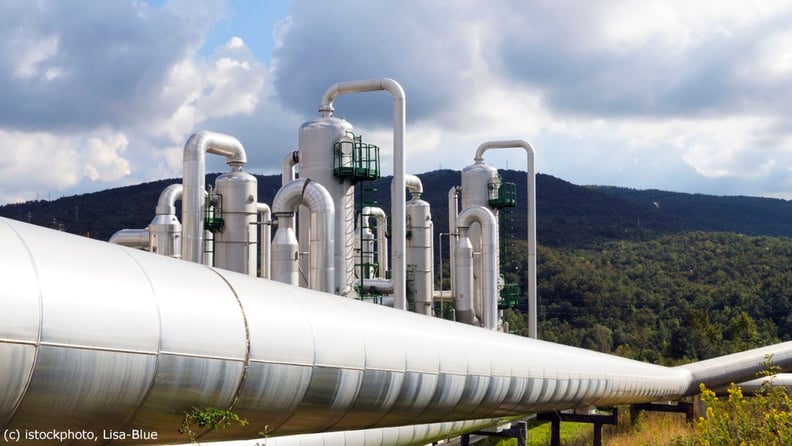
Industrial processes generate large quantities of waste heat, which often goes unused. Pentane is a tried-and-tested solution for Organic Rankine Cycle (ORC) plants, enabling this energy to be utilised economically. ORC plants convert heat into electrical energy even at temperatures that are too low for conventional steam power processes. The right process medium is crucial to the efficiency of the process. In this article, you will learn why n-pentane, iso-pentane and cyclopentane play an important role in this context, and what properties make them particularly suitable for use in ORC systems.
The ORC process converts thermal energy into electricity. The special feature is the generation of electricity at temperatures and pressures that are significantly below the values in conventional power plants. The use of industrial waste heat helps to use energy more efficiently and reduce CO₂ emissions. ORC plants therefore make an important contribution to Europe’s climate targets.
Wherever large amounts of exhaust heat are generated at low temperature levels, they can be further utilised thanks to ORC plants. In this way, sustainable energy generation or re-energy generation is made possible by process heat from various industries such as pharmaceuticals, glass or cement, bioenergy such as waste and sewage sludge incineration plants, geothermal energy, but also solar power plants and ocean thermal power plants.
The decisive factor is the organic process media, which have better evaporation properties than water. A common feature of all substances is their low boiling points.
Depending on the specific application, different organic process media are used. Examples of organic process media:
- Butane (C4H10)
- iso-Pentane (C5H12)
- Cyclopentane (C5H10)
- n-Pentane (C5H12)
- Toluene (C7H8)
- Ethanol (C2H5OH)
- Ethylbenzene (C8H10)
- R152a (1,1-difluoroethane)
-
R245fa (1,1,1,3,3-pentafluoropropane)
What are the key considerations when selecting a process medium for ORC systems?
The selection of a suitable process medium has a significant impact on the efficiency and cost-effectiveness of an ORC system. Key factors include the boiling point, evaporation behaviour, thermal stability, as well as safety and environmental considerations. As ORC systems operate with different heat sources, the working medium must be optimally matched to the respective temperature range. Pentanes have proven their worth in numerous industrial applications.
Read also:
- “Advancing sustainable solutions” – this is what Haltermann Carless is doing in the field of sustainability
Why is high product quality important for operators of ORC plants?
For operators of ORC plants, a consistently high quality of the process medium is of great importance. High purity supports stable plant operation and helps to maintain the system’s performance in the long term. At the same time, security of supply, reliable supply chains and technical advice play an important role in ensuring cost-effective plant operation.
Haltermann Carless Pentan for ORC systems: the ideal process medium for the ORC process
High-purity Pentanes such as n-Pentane, iso-Pentane and Cyclopentane have long been part of Haltermann Carless' product range. They are indispensable base materials. Depending on the process requirements, all three Pentane isomers are particularly well suited as process media for use in ORC systems. The choice of pentane variant depends, amongst other things, on the temperature range and the requirements of the ORC plant in question.
Pentanes comply with the necessary environmental regulations and certifications and offer the following advantages:
- low boiling point (28 - 50°C)
- low density
- high vapour pressure (42 - 91 kPa at 25°C)
- particularly high degree of purity of at least 95 %
- Ozone Depletion Potential (ODP) = 0
- Global Warming Potential (GWP) <1
Pentanes have no ozone-depleting potential (ODP = 0). Furthermore, compared with many fluorinated working fluids, they have a low global warming potential (GWP). As a result, they are regarded as a more environmentally friendly alternative in numerous applications.
- For technical data on Pentanes please click here.
In addition, Haltermann Carless offers you a comprehensive range of services as well as a reliable supply of pentanes.
Compelling services for you as a customer:
- Flexibility in transport and logistics
- Technical expertise and support
- Quality assurance through our own laboratories attached to the plant
- High security of supply thanks to our own hydrogenation plant at the Speyer site
Read more:
- New Hydrogenation plant for pentane production: security of supply for companies
- Haltermann Carless Pentane: Tailor-made and ecologically beneficial
- Chemical Park Speyer: Industrial Partnerships at Haltermann Carless
Conclusion: Pentanes as tried-and-tested process media for ORC plants
As a process medium in ORC plants, pentanes from Haltermann Carless are key to sustainable electricity and heat generation. Thanks to their physical properties, n-pentane, iso-pentane and cyclopentane are suitable for the efficient utilisation of industrial waste heat and other sustainable heat sources, thereby contributing to the achievement of the climate targets set out in the European Green Deal. In this way, pentanes once again make an important contribution to reducing CO₂ emissions.
Do you have any questions? Or would you like to know more about the performance of our pentanes? Then simply get in touch with us:

FAQ – Pentane for ORC systemsWhat is an organic working fluid? An organic working fluid is a working medium used in ORC (Organic Rankine Cycle) systems to convert heat into electrical energy. Unlike water, organic working fluids have lower boiling points and therefore evaporate even at comparatively low temperatures. This means that even low-temperature waste heat can be used efficiently to generate electricity. Why is pentane used in ORC systems? Due to its thermodynamic properties, pentane is particularly well suited as a process medium for ORC systems. Its low boiling point allows heat sources with lower temperatures to be utilised than is possible with conventional steam power processes. Depending on the plant design, n-pentane, iso-pentane or cyclopentane are used. Which pentane isomers are suitable for ORC plants? n-pentane, iso-pentane and cyclopentane are used in ORC plants. Which isomer is the best choice depends on the plant design and the temperature range of the available heat source. All three pentane isomers are characterised by good evaporation properties and are used in various industrial applications. In which sectors are ORC systems used? ORC systems are used wherever unused heat can be converted into electricity in a cost-effective manner. Typical applications include industrial waste heat, geothermal energy, biomass plants, waste and sewage sludge incineration plants, solar thermal energy, and other processes utilising low-temperature heat sources. What should companies look out for when selecting a process medium? The selection of a suitable process medium depends on the technical requirements of the ORC plant. Key criteria include the boiling point, thermodynamic properties, product purity, and environmental and safety aspects. Reliable supply, consistent product quality and technical support from the manufacturer also play a vital role in ensuring stable, long-term plant operation. |
This blog was first published in April 2022 and updated in July 2026.